Content Brief Template: Cut Revisions by 60%
A content brief template that cuts revision rounds from five to one. Built for teams scaling content without scaling chaos.
Apr 4, 2026 · 7 min read
Nine out of ten articles never get a single visitor from Google. Not an exaggeration — Ahrefs found that 90.63% of web content gets zero organic traffic. Zero.
90.63%
of web content gets zero organic traffic from Google
Ahrefs Content Marketing Study
The gap between content that ranks and content that disappears isn't writing talent. It's preparation. Whether the writer had a content brief that told them what to write, who to write for, and what success looks like — before a single word hit the page.
Most teams skip this step entirely. They hand a writer a keyword and a deadline, cross their fingers, then wonder why revision round five still hasn't fixed the core problem. The article was aimed at the wrong audience from the start.
This template fixes that.
What a Content Brief Actually Does
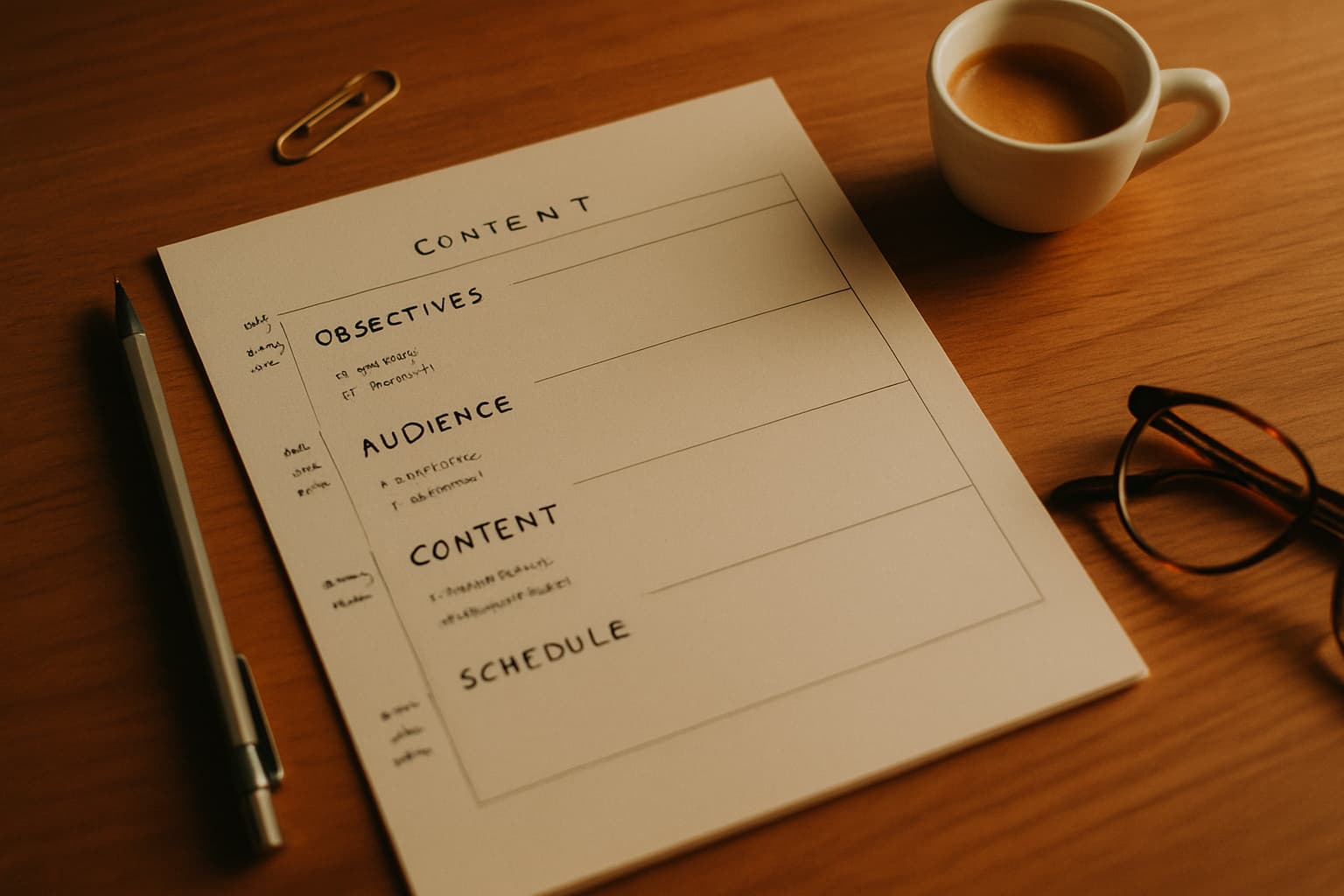
A content brief is a one-page document that tells a writer exactly what to produce — without telling them how to write it. The distinction matters. Good briefs give direction. Bad briefs give scripts.
60%
fewer revision requests with structured briefs
Growth Rocket Case Study
4-5→1
revision rounds reduced with quality rubrics
Siteimprove
40%
organic traffic increase within 4 months
Clearscope / Close CRM
When Growth Rocket implemented structured content briefs for their B2B SaaS clients, revision requests dropped by more than 60%. Three pieces ranked on page one within 90 days. Before the briefs? None did.
The best content briefs do most of the heavy lifting and provide structure for the intended piece, while giving a writer creative freedom to approach the topic as they wish.
Without a brief, every assumption the writer makes is a coin flip. Search intent, audience awareness stage, keyword priority, internal linking targets — all guessed. A content brief turns those coin flips into confirmed instructions.
The Template: 7 Sections That Matter
Step 1: Lock the Target Keyword and Search Intent
Start with one primary keyword and 3-5 secondary terms. But don't stop there — classify the search intent.
A searcher typing "content brief template" wants something downloadable and actionable. Someone searching "why content briefs matter" wants education. Write those two articles the same way and one fails guaranteed.
If you're building a keyword strategy from scratch, our guide on writing blog posts that rank covers the research step by step.
Step 2: Analyze the Top 5 Ranking Results
Open the top five articles for your target keyword. Don't read them for enjoyment — read them for gaps.
Note three things: what they all cover (table stakes you must include), what only one or two cover (differentiators), and what none of them cover (your angle). The brief should specify which gap this article fills.
This competitive analysis takes 15 minutes. It saves hours of revision. If you're running a website content audit alongside new production, this step doubles as competitive intelligence for your entire library.
Step 3: Specify the Audience and Awareness Stage
"Write for marketers" is useless direction. "Write for a SaaS content manager who publishes 8 articles per month but can't break past page 3 for any of them" — that's a brief.
Specify the reader's job title, their biggest pain point, and what they already know. A brief targeting beginners reads nothing like one targeting practitioners. Getting this wrong means the tone, depth, and examples all miss — and no amount of editing fixes a foundation problem.
Step 4: Map the Heading Structure
Don't dictate every word. Do dictate every H2.
Give the writer a skeleton: suggested H2 headings, key H3s where structure matters, and a word count range per section. Leave room to rearrange — but remove the guesswork about which topics each section covers.
An article targeting "content brief template" might need sections on keyword research, competitor analysis, audience definition, and the template itself. Spelling that out prevents 800 words on the definition and 200 on the actionable steps. Your editorial calendar should track these outlines alongside publish dates so nothing falls through the cracks.
Step 5: Set Internal and External Link Targets
Here's the section most briefs skip. And it's the section that compounds your SEO over time.
List 3-5 internal pages the article should link to. Be specific — include the URL and suggested anchor text. Strong internal linking can lift organic traffic by 40% without publishing anything new.
Every new article is a chance to strengthen your existing content. Missing that opportunity 20 articles in a row creates a site with no connective tissue — lots of pages, no authority signals between them.
Step 6: Add Tone, Voice, and Anti-Patterns
Your brand voice document belongs in the brief, not in a separate wiki the writer has to hunt for. Three things matter here.
First, a voice description: "technical but conversational" or "direct, no hedging." Second, 2-3 example sentences that nail the tone. Third, a short list of words or phrases to avoid — the patterns that make your content sound generic.
If you're using AI writing tools to produce first drafts, this section matters even more. AI defaults to bland, committee-approved prose. Explicit voice guidelines are the difference between output that sounds like your brand and output that sounds like everyone else's.
Step 7: Include a Quality Rubric
The brief should define what "done" looks like. Growth Rocket found that teams scoring briefs on a rubric before sending them to writers cut downstream revisions from 4-5 rounds to 1-2.
Build a five-point checklist:
- Does the article match the specified search intent?
- Are all required internal links present?
- Does every section pass the "so what?" test?
- Is the word count within the target range?
- Does the tone match the voice guide?
Rating briefs on a rubric before they reach writers pays back multiples in reduced downstream revision time. Briefs scoring below threshold go back for revision before production starts.
This rubric isn't just for writers. It's for the editor reviewing the draft. When both sides share the same scoring criteria, "I don't like this" turns into "Section 3 doesn't match the specified search intent." That's a fixable note versus an opinion — and it's why revision rounds drop so dramatically.
Common Mistakes That Burn Your Budget
No competitive analysis. Teams that skip the SERP review end up duplicating what already ranks. You can't differentiate if you don't know what exists.
Briefs that are too vague. "Write about content marketing" leaves every decision to the writer. Every decision they make is a potential revision. Check what a solid content marketing strategy looks like before you start briefing individual pieces.
Ignoring existing content. If you don't know what you've already published, you'll create keyword cannibalization — multiple articles fighting for the same search term. Run a content audit before briefing new pieces, or at minimum maintain a live content inventory.
What to Expect After You Ship This
Revision rounds drop first. The Growth Rocket data shows 60%+ reduction — and that's the conservative number for teams that score briefs before handing them off. You'll feel the difference within your first batch of articles.
Rankings follow. Close, the CRM company, saw a 40% increase in organic traffic within four months of implementing content-grade-driven briefs through Clearscope. The brief didn't write the articles. But it made sure every article had a real shot at ranking before the writer started.
The compounding effect matters most. Every properly briefed article was designed to link to and support your existing library from day one. Plan your cadence with an editorial calendar and track performance through the right metrics — each new article reinforces what came before instead of floating in isolation.
Frequently Asked Questions
- What is a content brief template?
- A content brief template is a standardized document that provides writers with everything they need to produce a specific piece of content — target keyword, search intent, audience profile, heading structure, internal link targets, voice guidelines, and a quality rubric. It replaces guesswork with clear direction.
- How long should a content brief take to write?
- A thorough content brief takes 20-30 minutes, including 15 minutes for competitive SERP analysis. That investment saves 2-4 hours of revision time downstream. Teams using briefs consistently report 60% fewer revision rounds.
- What's the difference between a content brief and an outline?
- An outline covers structure — headings and topics. A content brief covers structure plus context: target keyword and intent, audience profile, voice guidelines, link targets, and quality criteria. Outlines tell writers what sections to write. Briefs tell them why each section matters and who it's for.
- Do I need a content brief if I'm using AI writing tools?
- More than ever. AI tools default to generic, middle-of-the-road prose. A detailed content brief — especially the voice guidelines and anti-pattern sections — is the only way to get AI output that sounds like your brand instead of everyone else's.
- How do content briefs improve SEO performance?
- Briefs ensure every article targets a specific keyword with the correct search intent, includes planned internal links, and fills a gap competitors missed. Clearscope found that teams using content-grade-driven briefs saw 40% more organic traffic within four months.